Toyota IST Review 2026: Is It Still the Best Budget Hatchback for Import?
It is 2026, and the automotive world is filled with hybrids and EVs. Yet, in many parts of the world—from the bustling streets of Dar es Salaam, Tanzania to the winding roads of Kingston, Jamaica—one car refuses to retire: the Toyota IST.
Why is this discontinued model still one of the most requested used cars at Carused.jp? The answer lies in a perfect storm of affordability, bulletproof reliability, and suv-like practicality. While production ended years ago, the Toyota IST (known as the Scion xA in North America) remains a legend in the used car market.
In this comprehensive 2026 review, we break down fuel consumption, common problems, and why this “mini-SUV” might be the smartest investment you can make this year.
What Makes the Toyota IST Special in 2026?
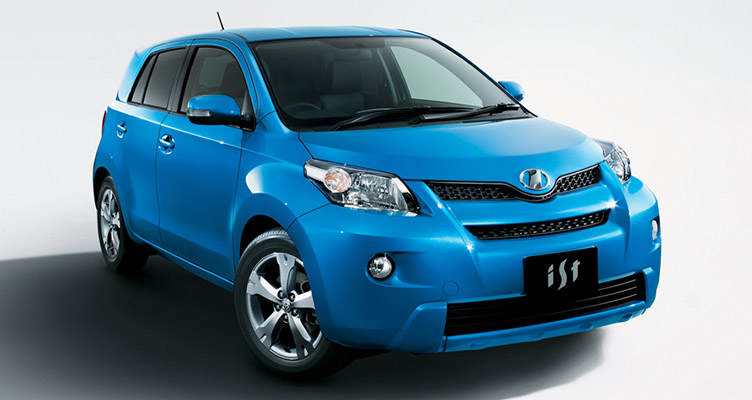
Many buyers compare the Toyota IST to the Toyota Vitz (Yaris). While they share the same platform, the IST was designed for a different purpose. It sits wider, looks more aggressive, and feels more substantial on the road.
1. The “Crossover” Appeal Before Crossovers Were Cool
The defining feature of the IST is its prominent wheel arches and slightly elevated stance. In 2026, where road conditions in many developing nations can still be challenging, this design offers a distinct advantage. It handles speed bumps and rough patches better than a standard low-profile hatchback, protecting your undercarriage from damage.
2. The Legendary 1NZ-FE Engine
Under the hood, most IST models exported from Japan feature either the 1.3L (2NZ-FE) or the 1.5L (1NZ-FE) engine. These are the same engines found in the Toyota Probox and Corolla Axio.
- Durability: These engines use a timing chain, not a belt. This means you don’t need to worry about snapping belts causing catastrophic engine failure.
- Parts Availability: Because it shares parts with millions of other Toyotas, finding a water pump, alternator, or oil filter is easy and cheap in almost any country.
- Mechanic Friendly: No complex electronics or hybrid systems. Any mechanic in a local garage can fix an IST with basic tools.
Interior & Practicality: Bigger Than It Looks
The exterior looks compact, but the interior is “magic.” Toyota designed the IST with a high roofline, which provides excellent headroom for tall drivers.
For Business Owners: The rear seats fold completely flat. This turns your passenger car into a mini-cargo van. We have many customers who use the IST to transport goods for their shops or use it as a robust taxi vehicle (Uber/Bolt) in cities where fuel economy is king.
Toyota IST Fuel Consumption
With rising fuel prices globally, efficiency is the #1 priority for our customers. Here is what you can realistically expect from a used Toyota IST in good condition:
| Engine Model | Displacement | Average Fuel Consumption | Best For |
|---|---|---|---|
| 2NZ-FE | 1300cc (1.3L) | 15.0 – 18.0 km/L | City driving, Taxi use, Maximum savings |
| 1NZ-FE | 1500cc (1.5L) | 13.0 – 16.0 km/L | Highway driving, Hilly areas, Carrying loads |
*Note: Fuel consumption depends on tire pressure, road conditions, and maintenance history.
Toyota IST vs. Toyota Vitz: Which Should You Buy?
This is the most common question we get at Carused.jp. Both are excellent, but they serve different needs.
- Choose the Toyota Vitz if: You want the absolute lowest price and maximum fuel economy. It is smaller, lighter, and strictly for city use.
- Choose the Toyota IST if: You want a car that feels safer and more stable on the highway. The IST has a wider body and larger tires, making it less susceptible to crosswinds and bumps. It also has a more premium interior feel compared to the base model Vitz.
Important Warning: Import Regulations & Condition
Since the Toyota IST is an older model (production ended in 2016), you must check your country’s import regulations.
- Ideal Markets: Tanzania, Zambia, Uganda, Caribbean countries, and New Zealand (for newer models) often allow older vehicles or have flexible age limits.
- Restricted Markets: Countries with strict 8-year age limits (like Kenya) may only allow the very last production models or may not allow the IST anymore. Always verify with your local revenue authority.
Why “Condition” Matters More Than “Price”
When buying a car that is 10+ years old, the condition is everything. A “cheap” IST with a rusted undercarriage or a failing transmission will cost you double in repairs.
The Carused.jp Promise:
We do not just ship cars; we ship trust. Because the IST is an older model, our professional inspectors perform a rigorous check before we even list it. We check for engine knock, transmission slips, and hidden rust.
Final Verdict: Is the Toyota IST Worth It?
Absolutely. In 2026, the Toyota IST represents one of the best values in the Japanese used car market. It offers the reliability of a Corolla, the utility of a small SUV, and the fuel economy of a compact hatch—all for a price that fits a tight budget.
If you need a car that will start every morning, handle rough roads with grace, and hold its value for resale, the Toyota IST is the champion.
Ready to find yours? Don’t wait. Good condition units sell within days of arriving at our stockyard.
Disclaimer: Information regarding fuel consumption and specifications is based on factory data and may vary depending on the vehicle’s age and condition. Please consult with the Carused.jp sales team for specific vehicle reports.